200+
Projects Delivered
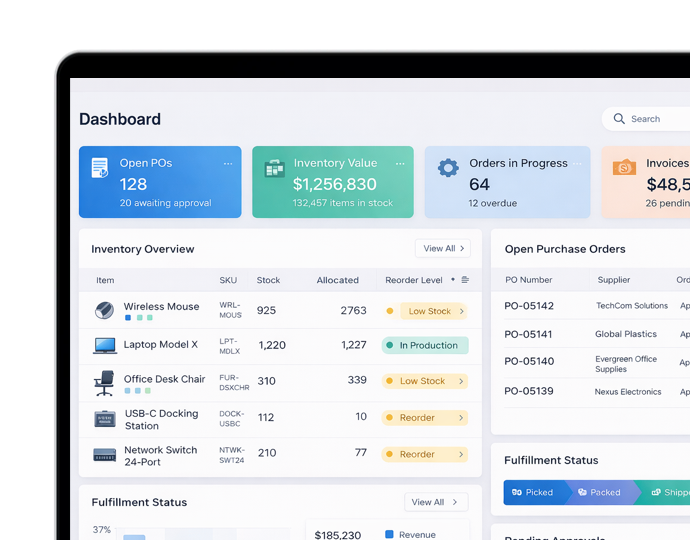





Every ERP engagement starts with your operational workflows and reporting needs, not a feature checklist. We build the platform that unifies how your departments actually work.
General ledger, accounts payable/receivable, and budgeting systems that automate financial operations and provide real-time visibility into cash flow and margins.
End-to-end inventory tracking, procurement automation, and supply chain visibility tools that reduce stockouts, waste, and manual reconciliation.
Employee lifecycle management, time tracking, and workforce scheduling systems integrated with payroll and compliance requirements.
Purchase order workflows, vendor scorecards, and contract management platforms that control spend and streamline supplier relationships.
Cross-department reporting dashboards that consolidate operational, financial, and workforce data into actionable executive-level views.
Automated approval chains, routing rules, and notification systems that eliminate manual handoffs between finance, operations, HR, and procurement.
Active Logic works with established companies that need unified operational platforms to replace disconnected systems spanning finance, operations, HR, and supply chain. Our clients are organizations where manual data entry between departments creates errors, compliance risk, and reporting blind spots.
We partner best with teams that understand their operational complexity and need engineering execution to build the platform that manages it — and where ERP quality has measurable impact on efficiency, compliance, and margins.
ERP projects fail when they try to do everything at once. We start by identifying the highest-pain department or workflow — usually finance, inventory, or procurement — and build that module first. A working system in one department builds organizational confidence and provides a foundation for expanding to others.
Before writing code, we map your actual cross-department workflows end-to-end. We document how purchase orders move from request to approval to payment, how inventory data flows between warehouse and finance, and where manual handoffs create errors or delays. This process mapping drives every architecture decision.
Integration with existing systems is planned from day one. Your ERP needs to connect with accounting software, payroll providers, warehouse management systems, and vendor platforms. We design integration layers with real-time synchronization, error handling, and monitoring so your teams work from one source of truth across every department.
Every ERP module includes audit logging, role-based access control, and compliance-ready reporting as standard architecture. For regulated industries, we design systems that maintain traceable, automated workflows from the start — because retrofitting compliance into an operational platform is significantly more expensive than building it in.
Your Engagement Journey
Map requirements, define success criteria, identify risks
Design system architecture, plan delivery milestones
Iterative 2-week sprints with demos and feedback loops
Production deployment, knowledge transfer, ongoing support
As a U.S.-based custom software development company, we partner with leadership teams that need reliable execution, clear communication, and measurable delivery momentum across regions through our locations hub.
Mission-critical software delivery depends on governance, technical quality, and execution discipline. We run engagements with senior U.S.-based leadership and delivery controls built for operational continuity.
A Director of Engineering owns technical direction, risk management, and stakeholder alignment from planning through release.
Architecture reviews, QA discipline, and DevOps practices are integrated into the delivery rhythm to protect stability as scope evolves.
Structured handoffs, documentation, and release-readiness checkpoints keep momentum high while reducing disruption to internal teams.
Delivery Governance Loop
Tell us about your operational workflows, reporting needs, and integration challenges. We'll align the right team and outline a clear next step.
Real engagements. Real delivery outcomes. See how our teams have executed for enterprise clients.



Commercial ERPs are designed for broad applicability, which means your team adapts to the software rather than the other way around. Custom ERP development makes sense when your operational workflows, industry-specific processes, or compliance requirements don't fit commercial templates — or when licensing and implementation costs for a major vendor exceed the cost of building what you actually need.
ERP development is typically phased by department or function. An initial module — such as financial management or inventory — takes 4–6 months from discovery through production. Full enterprise rollouts spanning multiple departments run 12–24 months with phased deployment, allowing each department to adopt and provide feedback before the next module launches.
Yes. Data migration is a core part of every ERP engagement. We map existing data structures across all source systems, clean and normalize records, and execute migration with validation checkpoints. We run parallel systems during transition so your operations never lose access to critical business data.
We design ERP interfaces around your team's existing workflows to minimize disruption. Phased rollouts by department let us incorporate real user feedback before expanding. We provide documentation, training sessions, and dedicated support during transition periods to ensure adoption succeeds.
Custom ERPs can integrate finance, operations, HR, procurement, inventory, supply chain, and executive reporting into a single platform. The key advantage is that cross-department workflows — like purchase approvals that touch procurement, finance, and operations — are automated end-to-end instead of requiring manual handoffs between disconnected systems.
We implement role-based access control, audit logging, encrypted data storage, and automated compliance checks as foundational architecture. For industries with specific regulatory requirements — healthcare, finance, manufacturing — we design systems that meet those standards from day one and maintain compliance as the platform evolves.
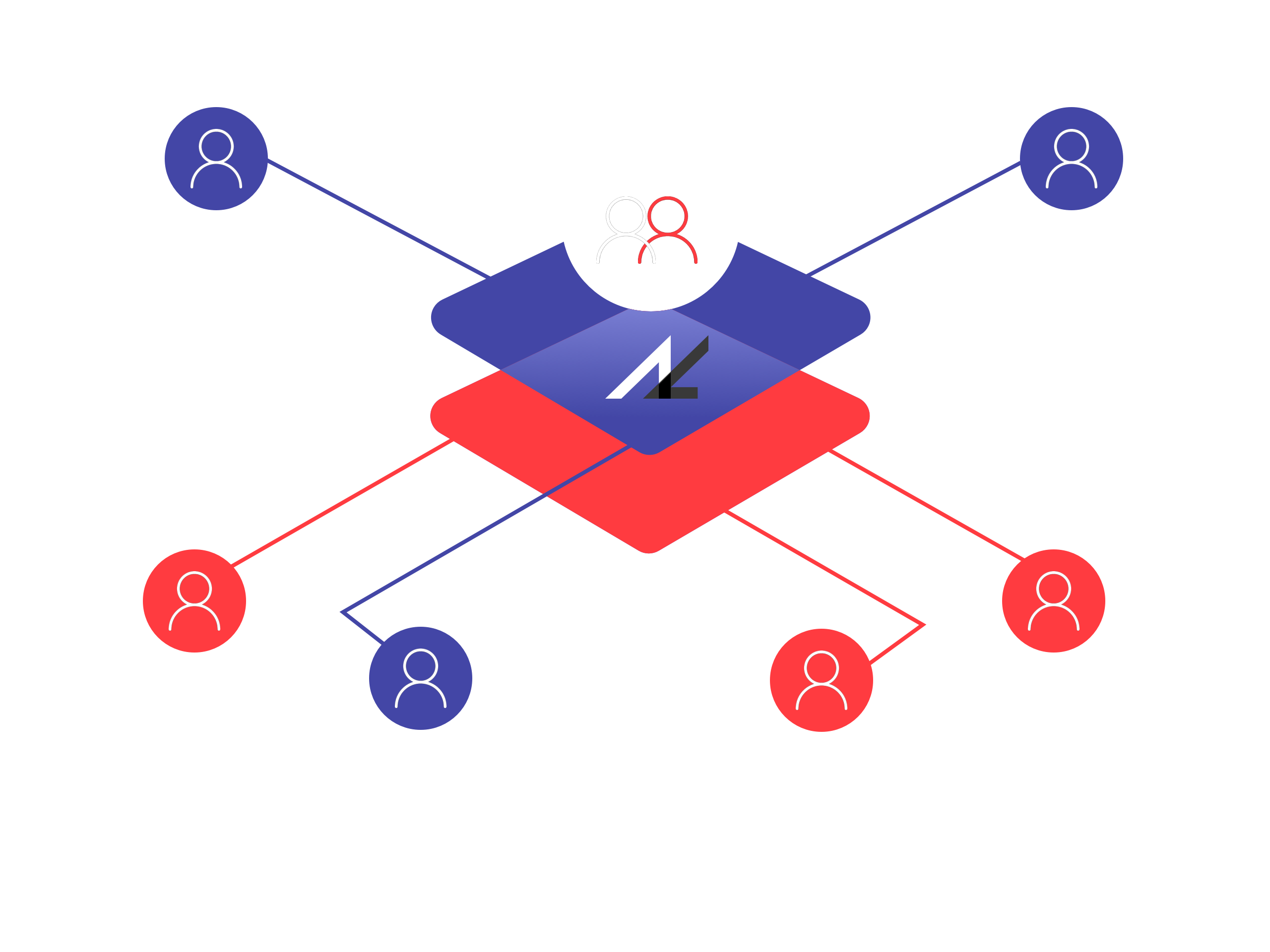
Team-as-a-Service gives you two engagement options with the same director-led accountability, 100% U.S.-based senior engineers, and mission-critical delivery standards.
With You
Active Logic engineers integrate into your planning cadence and stakeholder workflows as an extension of your internal team, adding leadership and delivery capacity without disrupting the way your organization already works.
For You
Active Logic leads planning, implementation, QA, and release execution end-to-end while maintaining transparent checkpoints with your leadership team, so outcomes stay predictable and management overhead stays low.
Share your goals, constraints, and timeline. We'll align the right team and map the next practical step.
